

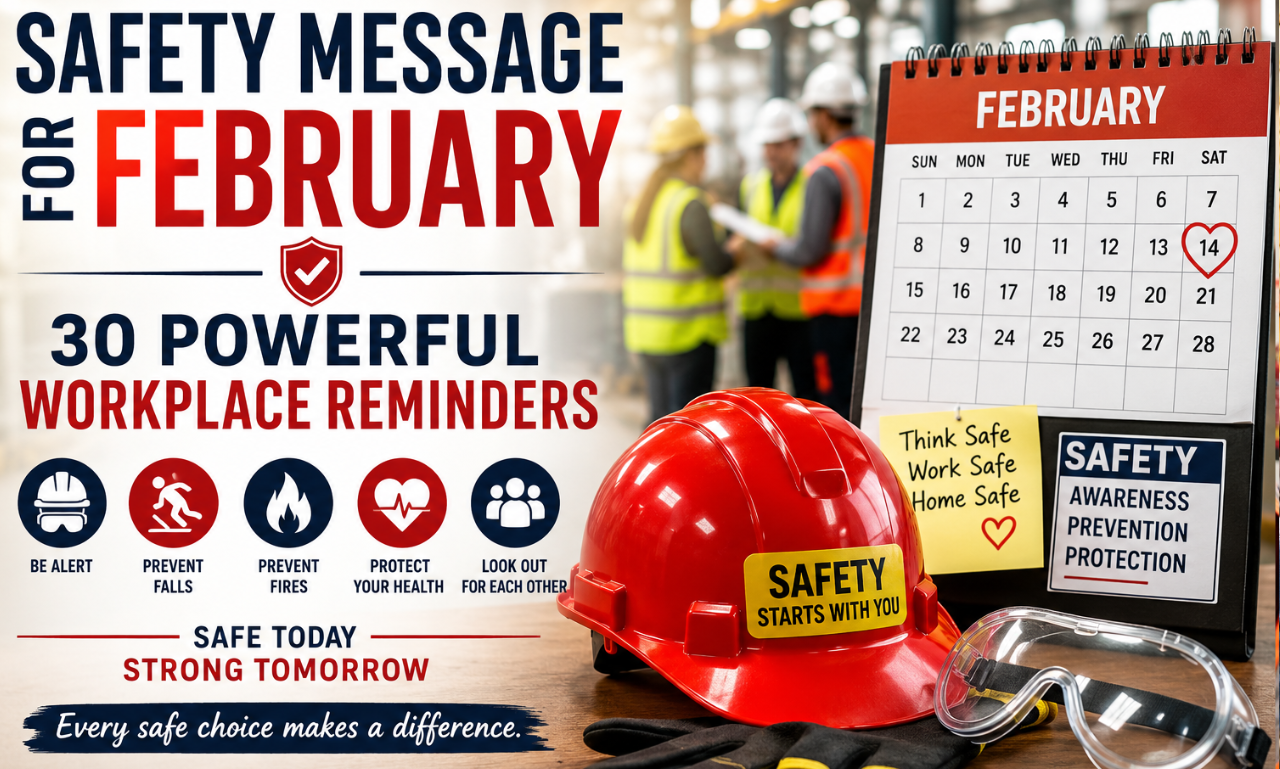
February may be the shortest month of the year, but it gives workplaces an important opportunity to refresh safety habits. A good safety message for February can remind employees to recognize seasonal hazards, prevent fires and burns, drive carefully, use the right protective equipment, and look out for one another.
The most effective safety messages are short, practical, and easy to remember. Instead of simply telling employees to “be safe,” a useful reminder identifies a potential risk and encourages a specific action.
February also includes important safety and health observances. The National Safety Council’s 2026 calendar lists American Heart Month throughout February and National Burn Awareness Week from February 1–7. These observances give employers additional opportunities to start meaningful conversations about prevention, preparedness, and well-being.
If you’re looking for more ways to encourage employees, explore our motivational messages.
Whether you need a message for a toolbox talk, employee newsletter, workplace poster, or team meeting, a safety message for February can turn a seasonal reminder into a practical safety action.
Quick Answer: What Is a Good Safety Message for February?
A good safety message for February reminds employees that workplace safety depends on everyday decisions:
“This February, slow down, identify hazards, use the right protection, and look out for one another. Every safe decision helps create a safer workplace.”
You can use this message in a safety meeting, toolbox talk, employee email, workplace poster, newsletter, or team chat.
30 Safety Messages for February
These original messages cover general workplace safety, winter conditions, fire and burn prevention, employee well-being, and teamwork.
General February Safety Messages
- “Make safety a daily habit this February, not just a monthly reminder.”
- “Safety begins when we choose to slow down, pay attention, and think before we act.”
- “Protect yourself, protect your coworkers, and never ignore a workplace hazard.”
- “A safer workplace starts when everyone accepts responsibility for their own actions and looks out for others.”
- “Do the job safely today so you can return home safely tonight.”
- “A near miss is a warning. Report it, learn from it, and help prevent the next one.”
- “Never trade safety for speed. Take the time to complete the task correctly.”
- “Look twice, think ahead, and choose the safer action.”
Winter Safety Messages
Winter weather can create slippery surfaces, difficult driving conditions, cold exposure, and other hazards. OSHA recommends clearing snow and ice from walking surfaces and taking precautions when walking on unavoidable snow or ice.
- “Cold weather can change working conditions, so change your approach and work carefully.”
- “Watch your step on wet, icy, muddy, or slippery surfaces this February.”
- “Slow down in difficult weather. Arriving safely matters more than arriving quickly.”
- “Keep walkways clear, floors dry, and work areas well lit to reduce fall hazards.”
- “Before driving, check the weather, road conditions, and condition of your vehicle.”
- “If conditions become unsafe, stop, communicate the problem, and follow your workplace procedures.”
Fire and Burn Safety Messages
National Burn Awareness Week is observed February 1–7, 2026. The American Burn Association’s 2026 campaign specifically focuses on preventing burns in workplaces, making this a useful February topic for safety communication.
- “Prevent burns before they happen by identifying heat, flame, and chemical hazards before starting work.”
- “Know your evacuation route, know where emergency equipment is located, and know when to leave.”
- “Never underestimate a burn hazard. A moment of carelessness can lead to a serious injury.”
- “Keep flammable materials away from ignition sources and report unsafe conditions immediately.”
- “A clear emergency exit can become a lifesaving exit. Keep escape routes unobstructed.”
Health and Well-Being Safety Messages
February is American Heart Month, an annual observance that encourages attention to cardiovascular health and lifesaving preparedness. The American Heart Association’s 2026 resources also emphasize CPR awareness and learning Hands-Only CPR.
- “Your health is part of workplace safety. Pay attention to your well-being and take concerns seriously.”
- “A safe workplace protects more than hands and feet; it supports the well-being of the whole person.”
- “Take appropriate breaks, stay alert, and recognize when fatigue could affect safe decision-making.”
- “Looking after your health can help you stay focused, alert, and ready to work safely.”
- “Speak up when stress, fatigue, or another concern could affect your ability to work safely.”
Team Safety Messages
- “Safety becomes stronger when coworkers look out for one another.”
- “If you see something unsafe, say something. Speaking up can help prevent an injury.”
- “A strong safety culture starts with people who care enough to act.”
- “A simple reminder today may help a coworker avoid an injury tomorrow.”
- “Never assume someone else will report a hazard. If you see it, take the appropriate action.”
- “This February, make safety more than a message. Make it part of every decision.”

Safety Message for February at Work: Practical Employee Reminders
A safety message becomes more meaningful when it connects to a real workplace hazard. Rather than discussing every possible risk at once, choose topics that match your employees’ jobs, environment, and seasonal conditions.
Choosing the right safety message for February starts with understanding the hazards employees are most likely to face during the month.
Slips, Trips, and Falls
Winter can bring rain, ice, snow, mud, and wet floors. Moisture can also be tracked indoors through entrances and walkways.
Employees should keep walking surfaces clear, report spills and damaged flooring, use appropriate footwear, and pay attention when moving through entrances and outdoor areas.
OSHA specifically recommends clearing snow and ice from walking surfaces and using appropriate footwear and slower steps when icy conditions cannot be avoided.
Safety message:
“Watch your footing, keep walkways clear, and report slippery conditions before someone gets hurt.”
Fire and Electrical Safety
February is a good time to review fire prevention and electrical safety procedures. Discuss damaged cords, overloaded outlets, unsafe equipment, blocked exits, ignition sources, and evacuation responsibilities.
Employees should know how to report electrical hazards and understand what they should do when a fire alarm or other emergency warning occurs.
Safety message:
“Prevent fires by respecting electrical hazards, keeping exits clear, and reporting damaged equipment.”
Personal Protective Equipment
Personal protective equipment should match the hazards associated with the task. Employees should know what PPE is required, how to wear it correctly, and when it needs inspection, cleaning, repair, or replacement.
Safety message:
“Wear the protection your job requires, inspect it before use, and never ignore a known hazard.”
Emergency Preparedness
An emergency is not the time to discover that employees do not know where to go or what to do.
Review evacuation routes, emergency contacts, alarms, assembly areas, first-aid resources, and individual responsibilities.
Safety message:
“An emergency is not the time to learn the plan. Know your route and responsibilities before something happens.”
Winter Driving
Employees who drive for work should consider weather, visibility, road conditions, vehicle condition, and following distance.
A work deadline should never pressure someone into driving faster than conditions safely allow.
Safety message:
“Drive for the conditions, leave extra space, and never let a deadline pressure you into unsafe driving.”
Hazard Communication
Employees who handle chemicals should understand workplace labels, warning information, Safety Data Sheets, storage requirements, and required protective measures.
Safety message:
“Know the hazard before you handle the substance. Read the label, understand the SDS, and use the required protection.”
Short February Safety Messages for Employees
Sometimes a safety meeting needs only one sentence to start a useful conversation. These short reminders work well for toolbox talks, employee emails, posters, and team chats:
These short safety messages for February are especially useful when employees need a quick reminder without a long safety presentation.
- “See a hazard? Speak up.”
- “Safety starts before the task begins.”
- “Slow down and work deliberately.”
- “Wear your required PPE every time.”
- “Never ignore a near miss.”
- “Check the conditions before you start.”
- “Keep your work area clean and your exits clear.”
- “Think about the next step before taking it.”
- “If something is unsafe, stop and ask.”
- “Everyone goes home safer when everyone takes responsibility.”
A safety message for February can be as simple as a one-line reminder that helps employees pause, recognize a hazard, and make a safer choice.
Safety Message for February at Work
A workplace safety message should be practical enough for employees to apply during their normal routine.
Managers and supervisors can use:
“This February, take a moment before each task to identify hazards, follow established procedures, use the protection required for the job, and speak up when something does not look right. Safety is everyone’s responsibility.”
This type of message works because it focuses on behaviors employees can control instead of using vague reminders.
February Safety Quotes
Short safety quotes can work well on workplace boards, newsletters, social posts, and safety presentations.
- “Safety is built one careful decision at a time.”
- “A safer workplace begins with someone willing to speak up.”
- “Pay attention today so tomorrow does not become an accident report.”
- “Good safety habits are small actions with important results.”
- “Protect your hands, your health, your coworkers, and your future.”
- “The safest shortcut is the one you never take.”
- “When you notice a hazard, your voice can become part of the solution.”
- “Safety is not a distraction from the job; it is part of doing the job well.”
- “Take care of the person beside you and expect them to take care of you.”
- “A strong safety culture begins with everyday choices.”
These are original lines for general inspirational use and should not be presented as quotations from named individuals.
How to Use a February Safety Message
At a Safety Meeting
Open the meeting with one message and connect it to a hazard employees may actually encounter. Ask a simple question such as, “What safety hazard have you noticed recently?”
The best safety message for February is one that matches the workplace, the season, and the people receiving it. Choose a message that addresses a real concern and gives employees a clear action they can follow.
In a Toolbox Talk
Choose one topic instead of trying to cover everything. Winter driving, slips and falls, fire prevention, PPE, and emergency preparedness are useful starting points.
In an Employee Email
Keep the message brief and finish with one practical action. For example, remind employees to report slippery walkways or review their emergency routes.
On a Workplace Poster
Choose one memorable sentence and place it where employees naturally look, such as an entrance, break room, safety board, equipment area, or worksite entrance.
In a Team Chat
A short digital reminder can be:
“February safety reminder: slow down, watch for changing conditions, report hazards, and look out for the people working beside you.”

Why February Safety Messages Matter
A safety message should do more than fill space on a calendar. Its purpose is to bring attention to a hazard and encourage a safer decision.
February’s observances create natural opportunities for safety and health conversations. The National Safety Council lists American Heart Month and National Burn Awareness Week on its 2026 safety calendar. The American Heart Association also identifies February as American Heart Month and provides 2026 resources for heart-health awareness and CPR education.
The American Burn Association’s 2026 Burn Awareness Week campaign specifically highlights burn prevention in workplaces, including environments such as healthcare, commercial kitchens, laboratories, construction, and manufacturing.
The most effective approach is simple: choose one relevant issue, explain why it matters, and give employees one clear action.
For example:
Hazard: Slippery walkway
Reminder: Slow down and report it.
Action: Follow workplace procedures for cleaning, marking, or reporting the hazard.
A well-written safety message for February can keep important precautions visible throughout the month and encourage employees to turn safety awareness into everyday habits.
This turns a general safety reminder into practical communication.
For more detailed guidance on protecting workers during winter weather, see the official OSHA winter weather safety guidance.
When to Use These February Safety Messages
These messages can be adapted for:
- Workplace safety meetings
- Daily safety moments
- Toolbox talks
- Employee newsletters
- Safety posters
- Company emails
- Team messaging apps
- Safety training sessions
- Construction-site briefings
- Warehouse reminders
- Manufacturing workplaces
- Office safety communications
- Safety-focused social media posts
For regulated workplaces, general safety information should always be adapted to your organization’s procedures, hazards, applicable regulations, and professional guidance.
Related Safety Messages and Topics
If you are building a broader collection of workplace and inspirational content, February safety messages can naturally connect with:
- Workplace safety quotes
- Fire safety messages
- Winter safety tips
- Safe driving messages
- Workplace wellness messages
- Safety meeting topics
- Emergency preparedness reminders
- Accident prevention messages
- Inspirational workplace quotes
- Motivational messages for employees
These related topics can turn a single February campaign into a broader year-round safety communication strategy.
Whether you need a formal workplace reminder or a short message to share with employees, these safety messages for February can be adapted to different teams, industries, and safety campaigns.
FAQs
What is a good safety message for February?
A good safety message for February is: “Slow down, identify hazards, use the right protection, and look out for one another. Every safe decision helps create a safer workplace.”
What is a short safety message for February?
A simple option is: “This February, think before you act, identify hazards, and make the safe choice.”
What are the main February safety topics?
Common topics include winter weather, slips and falls, safe driving, fire and burn prevention, electrical safety, PPE, emergency preparedness, health, fatigue, and hazard communication.
What is the safety topic for February 2026?
There is no single universal workplace safety topic for February. Organizations should select subjects based on their own hazards and needs. For 2026, the National Safety Council lists American Heart Month and National Burn Awareness Week as February observances.
What is a good February safety moment?
A useful February safety moment can focus on one seasonal hazard and one preventive action. For example: “Wet and icy surfaces can increase the risk of falls. Slow down, use designated walkways, and report unsafe conditions.”
What is National Burn Awareness Week?
National Burn Awareness Week is observed February 1–7 in 2026. The American Burn Association’s 2026 campaign focuses specifically on preventing burns in workplaces as well as other environments.
Why should workplaces discuss safety in February?
February gives workplaces an opportunity to revisit seasonal hazards, reinforce existing procedures, discuss safety observances, and encourage employees to identify and report risks.
What are good February toolbox talk topics?
Good choices include slips and falls, winter driving, fire prevention, burn hazards, electrical safety, PPE, emergency preparedness, fatigue, and hazard communication.
How long should a safety message be?
A safety message can be one or two sentences. The most important thing is that it identifies a relevant concern and gives employees a clear action.
How can I make a safety message more effective?
Make it specific, brief, and connected to real workplace conditions. Instead of simply saying “be safe,” explain what employees should watch for and what they can do to reduce the risk.
Safety Resources
For workplace safety information, use authoritative sources alongside your organization’s own policies and procedures:
- National Safety Council: Its 2026 Safety Observance Calendar identifies American Heart Month and National Burn Awareness Week among February observances.
- OSHA: Its winter-weather guidance covers hazards such as slippery surfaces, cold conditions, and safe practices during winter weather.
- American Burn Association: Its prevention resources include National Burn Awareness Week and workplace burn-prevention information.
- American Heart Association: Its American Heart Month resources provide information on heart health, CPR awareness, and lifesaving preparedness.
Final Takeaway
The best safety message for February is one people can understand quickly and remember when it matters. Use February as an opportunity to discuss the hazards your team actually faces, from slippery walkways and winter driving to fire prevention, burns, PPE, emergency preparedness, and employee well-being.
A simple reminder can start a useful conversation. A useful conversation can strengthen a safety habit. And a stronger safety habit can help prevent injuries.
Looking for more practical reminders and thoughtful words? Explore our Safety Messages category for more helpful safety messages, reminders, and quotes.
This February, make safety more than a message—make it part of every decision.